Resources · Playbook
How to measure AI search traffic with GA4 and Search Console
6 min read · updated September 9, 2026

To measure AI search, use Search Console for visibility in Google's AI features and GA4 for recorded visits and key events. Keep a separate log of what assistants say about your business. These records answer different questions; combining their totals can produce a misleading conversion rate.
This guide is for a small marketing team with access to its own GA4 and Search Console properties. It builds on our small-team GEO guide and explains how to assemble a report you can use to decide what to improve next.
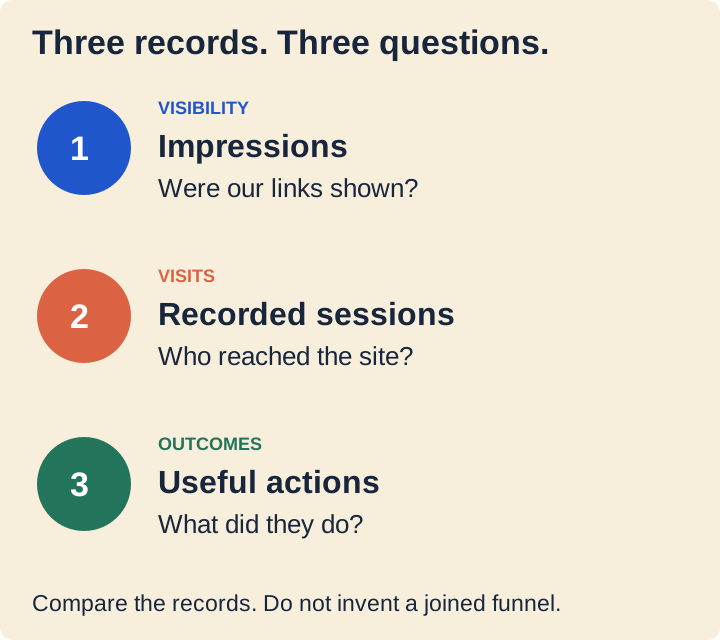
Start with the business action
Write down what a useful visit would produce. For a consultancy, that might be a completed enquiry. For a shop, it might be a purchase. A pricing-page visit can help explain interest, but it does not establish that someone became a customer.
GA4 calls events that are particularly important to your business key events. Check that your chosen event represents the completed action, then verify it records as intended. Clicking a submit button and successfully submitting a form are different things. Google's key-event documentation explains the underlying model.
For the report, keep the event name and definition beside the count. If the business later changes what qualifies as an enquiry, record the date. Otherwise a measurement change can look like improved marketing.
Find recorded AI assistant visits in GA4
Open Reports > Acquisition > Traffic acquisition. Select Session source / medium and examine the sources actually present in your property. This report describes sessions from new and returning users; the User acquisition report answers a different question about first acquisition. See Google's Traffic acquisition guide.
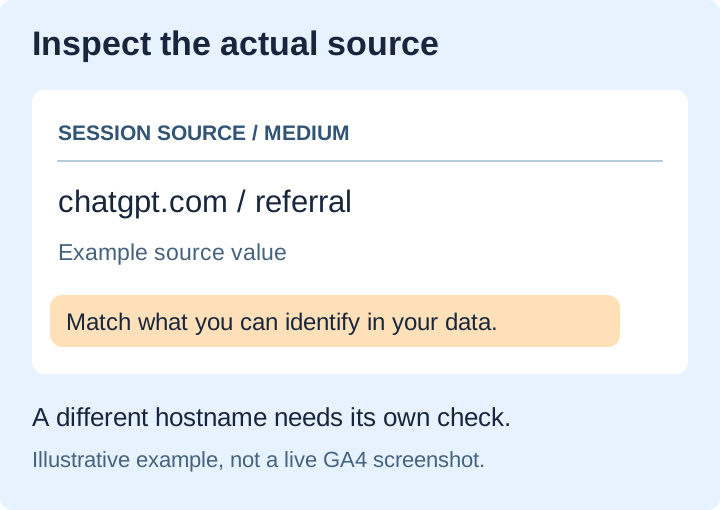
Search for assistant names and inspect the complete source values. Keep an inventory of the values you can identify, the date range and any uncertainty. Do not assume every assistant visit has the medium referral, and do not classify all google / organic sessions as AI traffic.
Start with this small reporting view:
- Recorded sessions from the identified sources.
- Engaged sessions from those sources.
- Your selected key event, with its definition.
- The landing pages those visitors reached, examined in a compatible report or exploration.
A zero means this view contains no matching recorded visits. Someone may still have encountered your brand in an answer without making an identifiable visit.
Create a separate AI assistants channel
If the source list is useful, make it reusable. An Editor or higher can open Admin > Data display > Channel groups, copy a group and add an AI assistants channel. Define Source rules for the values you intend to count, and put the channel before broader channels that could match the same traffic. Then select that custom group in an acquisition report. Google documents both the setup and an AI assistants example.
Our recommendation is to begin with a short list you have checked. A broad pattern that matches every source containing ai can include unrelated names. Validate both the sources you want to include and those you want to exclude before adopting the rule.
For example, if chatgpt.com appears in your data, an exact Source match can classify that value. It will not automatically include a different hostname or tagged source value. Add those only after checking what they represent. This is a configuration example, not a complete list of assistant sources.
Keep the group as a separate reporting view initially. Record its rules and edit dates so someone reading an older report can understand what was counted.
Read Google's AI visibility report separately
Search Console's Generative AI performance report for Search reports impressions for AI Overviews and AI Mode. You can examine pages, countries, devices and dates. It is a visibility report, not a conversion report. Its help page notes that insufficient impressions can explain a missing report. Check the current report documentation.
Google's June 2026 announcement, updated in August, explains that these impressions are also included in overall performance reporting. Do not add the dedicated AI total to the overall total: that would double-count overlapping data.
Keep the date range and filters with each export. Check the aggregation notes before comparing a property total with a sum of page rows. Neither number can be joined to an individual GA4 session merely because the dates match.
What about Bing, Copilot and answers with no click?
Bing's AI Performance announcement describes citation reporting across supported Microsoft experiences and selected partners. It explicitly distinguishes citation counts from ranking, placement and authority. Use that report within its documented scope, rather than calling it a count of all AI mentions. Bing's announcement.
Alongside platform reports, save a small set of answers to your buyer questions. Record the question, engine, mode, date, visible citations and whether the description is accurate. An unlinked mention belongs in that answer log. It is not a GA4 visit.
Our visibility-score guide explains why repeated observations matter. Keep the sample stable enough to compare, and describe the results as observations from that sample.
Turn the report into a decision
Here is a hypothetical reporting note: “Google AI impressions increased this month. GA4 recorded 18 sessions from our identified assistant sources and two completed enquiries. We have not established whether the Google impressions produced those sessions or enquiries.”
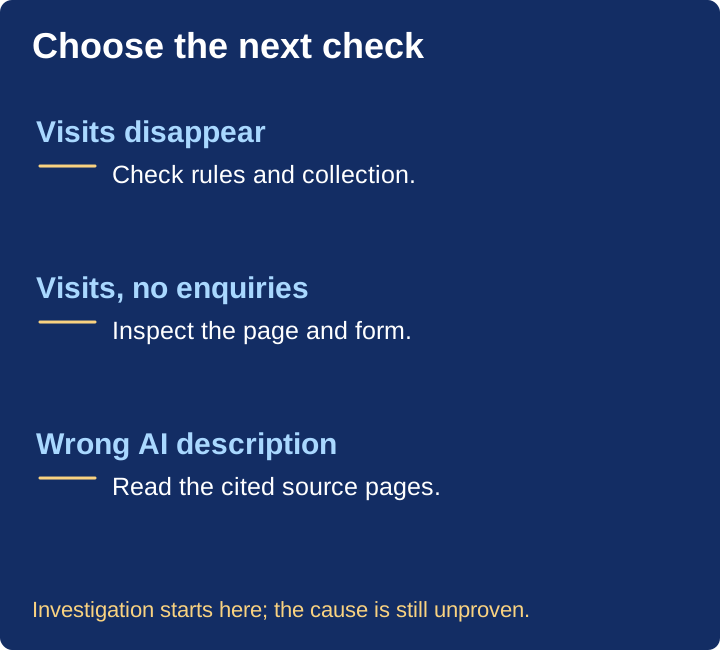
That is more useful than claiming an AI conversion rate from unrelated totals. The next step is to inspect the enquiries and landing pages, not to divide two by the Google impression count.
End each report with one action and the evidence behind it. Correct an inaccurate product description. Repair a broken enquiry form. Investigate a source that vanished after a reporting-rule change. Keep unexplained changes marked as unexplained.
Common questions
Can GA4 measure every AI-influenced sale? No. This workflow reports identifiable, recorded traffic and selected actions. It cannot reconstruct every earlier answer someone saw or every influence on a purchase.
Does a citation count as traffic? No. A citation is a link in an answer; traffic requires a recorded visit. Keep both if they help your decisions.
What should a small team do first? Verify one meaningful key event and inspect actual session sources. Add the platform visibility reports alongside them. Expand the reporting only when you know what decision the extra data will support.
Check your brand's AI visibility, then use the weekly GEO routine to keep observations and follow-up work together.
Citations (6)showhide
See who AI recommends in your category
The free scan asks ChatGPT three of your buyers' questions and shows whether you're in the answer, in about a minute.
Run the free scan →