Resources · Technical
Google AI Overviews: a website owner's guide
6 min read · updated September 9, 2026

Google AI Overviews are generated summaries within Search that can include links to supporting websites. For a site owner, the useful questions are practical: can Google access the page, is the site eligible to participate, what does the page contribute, and what can the available reports actually measure?
This guide covers organic visibility. It does not describe buying ads in AI results, and it does not promise that an eligible page will be selected. Google's documentation and controls were checked on 9 September 2026.
How do AI Overviews differ from AI Mode?
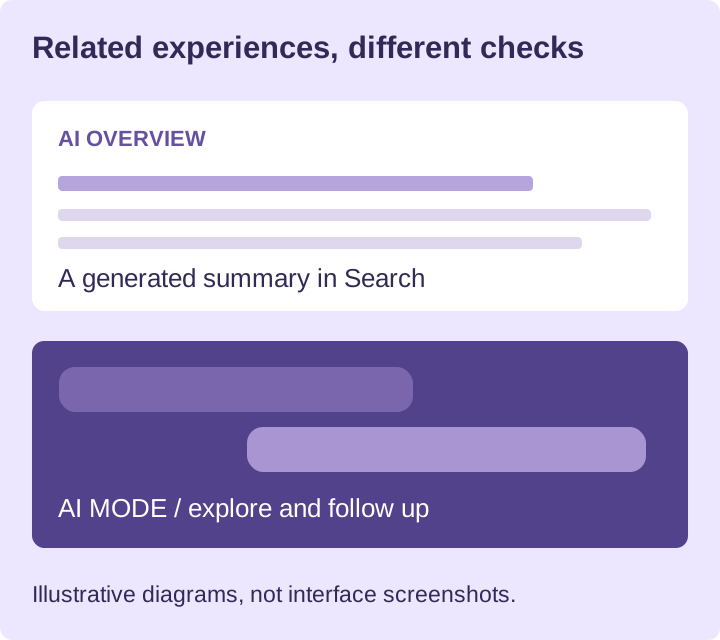
AI Overviews provide a generated response within the search experience when Google's systems judge it useful. AI Mode supports deeper exploration and follow-up questions. They can use different techniques and return different supporting links. Google's explanation of AI features describes those distinctions.
Google also announced a transition from an Overview into a follow-up conversation in AI Mode in January 2026. Treat the surfaces as related, while keeping the conditions of any visibility check in your notes. A saved AI Mode answer is not evidence that the same link appeared in an Overview.
Where do supporting pages come from?
Google describes retrieving relevant information from its Search index and sometimes issuing related searches to address parts of a question. This is often called query fan-out. It does not mean a publisher needs a separate page for every possible variation. Google's optimization guide explicitly warns against creating large numbers of pages primarily to manipulate these responses.
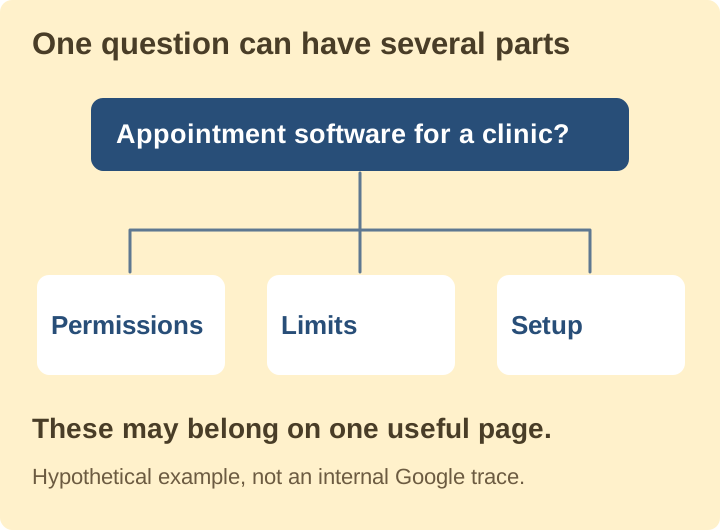
Consider a hypothetical query about choosing appointment software for a clinic. Related questions might concern permissions, scheduling limits or setup. Those questions can be answered together on a useful product page when they belong together. The example illustrates the concept; it is not a trace of Google's internal searches.
If your existing content is vague, fix the missing information. Producing ten slight variations of the same answer adds maintenance work without giving the reader ten useful resources.
Check eligibility in a sensible order
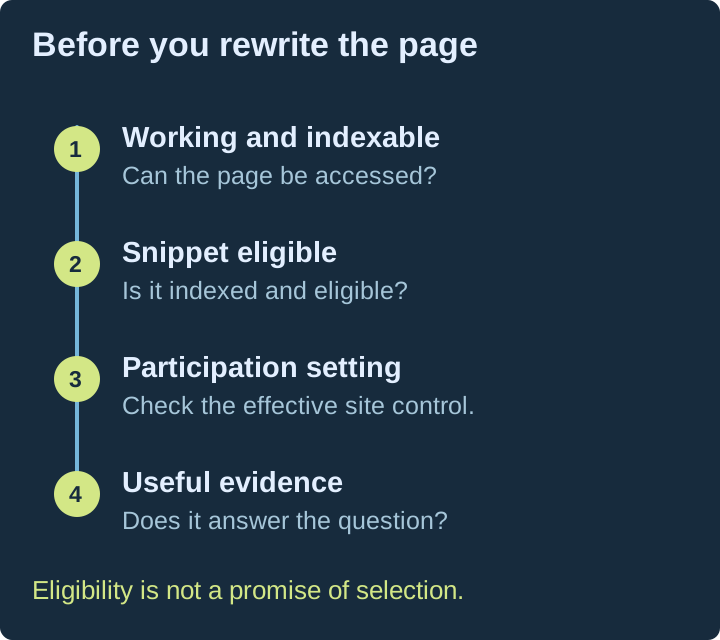
First, check the page itself. Google's Search technical requirements cover crawler access, a successful response and indexable content. For an AI supporting link, the page also needs to be indexed and eligible for a Search snippet, as described in its AI features documentation.
Next, check participation. Search Console now provides a Search generative AI control under Settings. Google's control documentation describes inclusion, exclusion and inheritance from a parent property. Inspect the effective setting and the property you are viewing before diagnosing an unexplained absence.
Then, check the evidence on the page. Eligibility gets a page considered; it does not establish that its answer is useful or that Google will select it. Our page-priority guide helps choose what to improve once access is understood.
Keep participation and training controls separate
The Search generative AI control governs participation in the listed Search features. Google says it does not act as a ranking or inclusion signal for other parts of Search and does not control AI training. Its documentation directs site owners to Google-Extended for the training choice. Read the scope of the control before changing anything.
This distinction matters because different controls answer different business questions. A request to limit model training is not automatically a request to disappear from organic Search. Inherited property settings can also affect which choice is currently applied.
Record the intended outcome and get the responsible site owner's agreement before changing access or participation. This article does not require a settings change. An inspection may establish that the current configuration already reflects the business's choice.
What should you improve on the page?
Google's Search Central advice for AI experiences emphasizes useful original content, accessible pages and a good experience across devices. Apply that to a specific reader problem.
A service comparison needs criteria and current facts. A tutorial needs steps that work and a clear way to check the result. A pricing explanation needs the limitations that affect cost. Keep supporting sources beside the claims they substantiate.
Images and diagrams should help explain the answer. Show a real process, a relevant comparison or a current interface. Describe the information in text too, so the article remains useful when an image cannot be seen. There is no reason to animate a diagram whose meaning is clearer when it stays still.
For implementation details, see structured data for AI crawlers and checking whether AI can read your website. Neither should become a promise of inclusion.
Measure visibility without inventing attribution
Google's 2026 Search Console announcement introduced dedicated views of generative AI impressions, including page, country and device breakdowns for Search. Those impressions remain part of overall reporting. Use the dedicated view to investigate visibility, and keep recorded visits and business actions in their appropriate analytics reports.
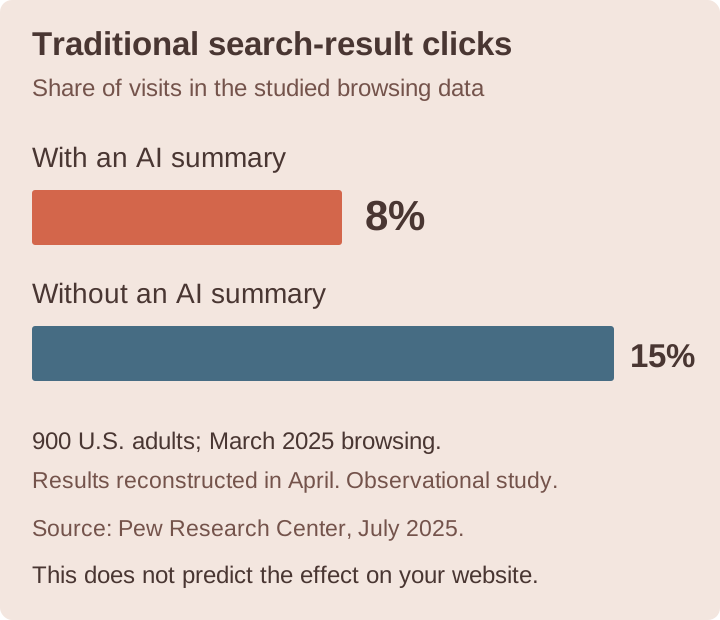
Pew Research's study of browsing by 900 U.S. adults in March 2025 found traditional-result clicks in 8% of visits with an AI summary, compared with 15% without one. Researchers reconstructed the search results in April, so the summary classification reflects that later collection. The finding describes the studied users and period; it does not predict your site's traffic or prove that the summary alone caused the difference.
Our GA4 and Search Console measurement guide gives you a practical reporting method. Do not calculate an AI conversion rate by dividing assistant-referred enquiries by Google AI impressions from a separate population.
Common questions
Can I guarantee an AI Overview citation? No. Passing technical checks does not guarantee selection, and a single successful observation does not guarantee another.
Should I judge success by one search? No. Save the conditions and results of repeated checks, then use the available platform reports and business outcomes alongside them.
What should I do this week? Inspect one commercially important page, confirm its effective participation settings with the site owner, and fix one verified information gap. Keep the observation date and revisit it through a weekly GEO routine.
Check your brand's AI visibility as a separate starting point for examining how an assistant describes your business.
Citations (8)showhide
- Google's explanation of AI features
- announced a transition from an Overview into a follow-up conversation in AI Mode
- Google's optimization guide
- Search technical requirements
- control documentation
- Search Central advice for AI experiences
- 2026 Search Console announcement
- study of browsing by 900 U.S. adults in March 2025
See who AI recommends in your category
The free scan asks ChatGPT three of your buyers' questions and shows whether you're in the answer, in about a minute.
Run the free scan →