Resources · Strategy
GEO strategy: which pages should you improve first?
6 min read · updated September 9, 2026

Generative engine optimization is work intended to improve how a business and its content appear in AI-generated answers. A useful GEO strategy starts with a buyer's decision and the evidence needed to make it. Before commissioning another explainer, check whether your product, pricing and comparison pages answer the questions a buyer would ask next.
If the term is new, start with what GEO means. This guide takes the next step: choosing a small set of pages worth improving, deciding what belongs on them and checking whether the work produced a useful result.
What changes when you plan for AI answers?
An answer can mention a business, link to a page or describe a product without sending a visitor to your website. Those are different outcomes. Search Engine Land's GEO overview is a useful introduction to the wider mix of content, reputation and measurement work. Its strategic advice should not be read as a specification of every assistant's ranking system.
For Google specifically, the company's current optimization guide describes this work as SEO. There is no special GEO schema requirement, and Google says it ignores llms.txt for Search. That boundary matters when deciding what deserves engineering time.
Plan for clear information that customers can check. Treat AI visibility as an outcome to observe, not a property a writer can certify by using a particular template.
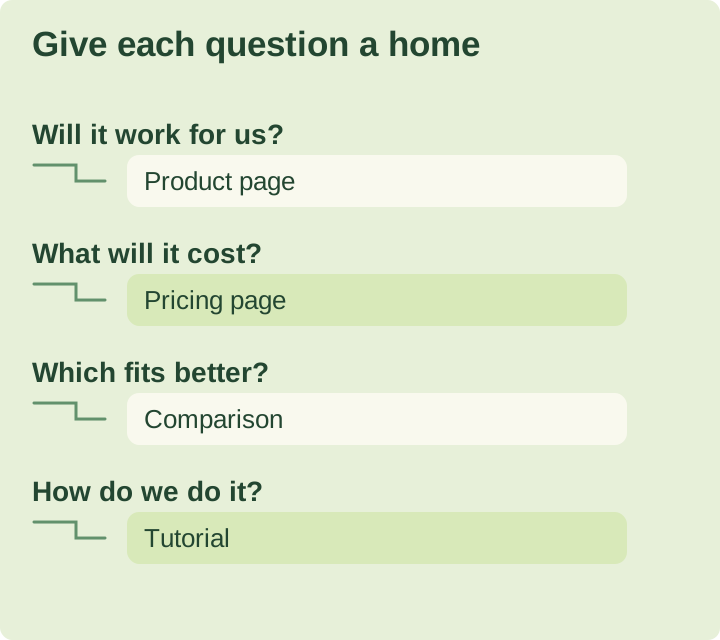
Start with one buyer decision
Choose a question that precedes a purchase or a serious enquiry. “What is our category?” may be useful for an introduction, but “Can this service handle our particular situation?” often demands information only your business can supply.
For a hypothetical scheduling product, the question might be: “Can a small clinic use this for several practitioners without sharing everyone's calendar?” The answer belongs on a product or use-case page with the relevant permissions, setup steps and limitations. A generic article about appointment scheduling would not settle the decision.
Use your buyer-prompt research to identify the real wording. Do not claim search volume or customer demand from a list generated by an assistant. Mark unvalidated questions as ideas to investigate.
Match the question to the right page
Product or service page: explain who it is for, what it does, important requirements and cases it does not support. Give a reader enough information to rule it in or out.
Pricing page: state what the price includes, relevant limits and charges that change the decision. If prices depend on a quote, explain what determines the quote rather than inventing an illustrative offer that could be mistaken for a real one.
Comparison page: name the criteria, use current sources and admit cases where the alternative is a better fit. Keep product facts separate from your judgment.
Guide or tutorial: answer a process question that cannot be handled well in a short product section. Show the steps, inputs, exceptions and a way to check the result.
These are editorial priorities, not a claim that one page type receives an AI ranking advantage. A useful first project can be an existing pricing page with one missing explanation.
Choose evidence before rewriting
For each proposed change, identify who or what can verify it. Product behavior needs a checked product configuration or current documentation. A customer result needs permission and the original evidence. A numerical comparison needs compatible definitions and dates.
Google's helpful-content guidance asks whether a page contributes original information and demonstrates trustworthy sourcing. You do not need to invent a case study to meet that standard. A precise explanation of a real limitation can be valuable information.
A hypothetical example must stay visibly hypothetical. Do not add a person's name, photograph or quotation to make it resemble a customer testimonial.
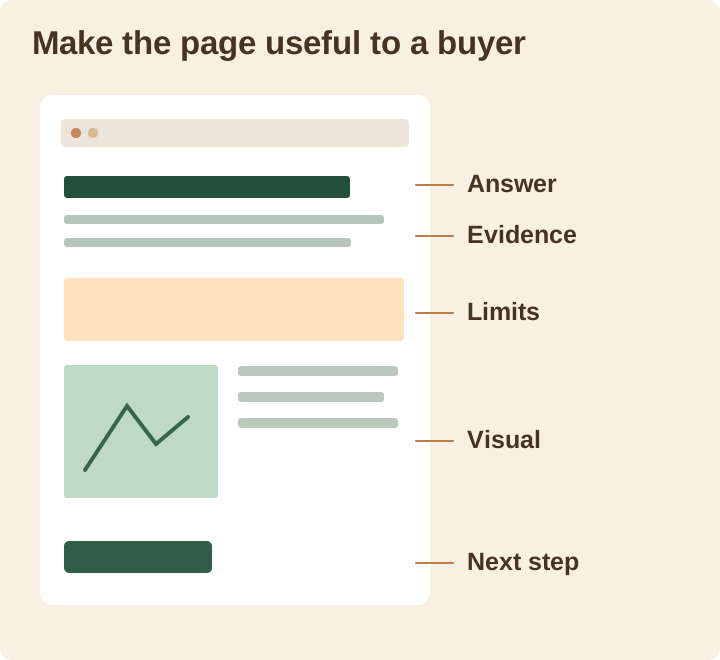
Improve the page without making it harder to use
Put the answer near the question. Keep its qualification close enough that the meaning survives a quick read. If a feature works only on one plan, say so in the explanation of that feature rather than hiding the exception at the bottom.
Use a visual when it explains a relationship or process faster than prose. A permissions diagram can clarify who can see an appointment. A real, current screenshot can show where a setting lives. A decorative stock image cannot verify either claim. Follow Google's image guidance on descriptive alternative text and relevant surrounding context.
Link naturally to the page that answers the next question. A product explanation can point to pricing; a discussion of measurement can point to the AI traffic guide. Avoid inserting the same keyword-rich link into every paragraph.
Check access before judging the copy
A polished page cannot help a visitor who cannot reach it. Google's technical requirements include accessible, working pages with indexable content. For Google AI-specific participation and reporting, use our AI Overviews guide.
If the page depends on a complicated interaction to expose the key information, inspect what is actually available to a visitor and to the relevant crawler. Our website readability guide covers this check in more detail. Do not remove important interface behavior simply to satisfy a vague claim about AI preferences.
Set a completion test and a review date
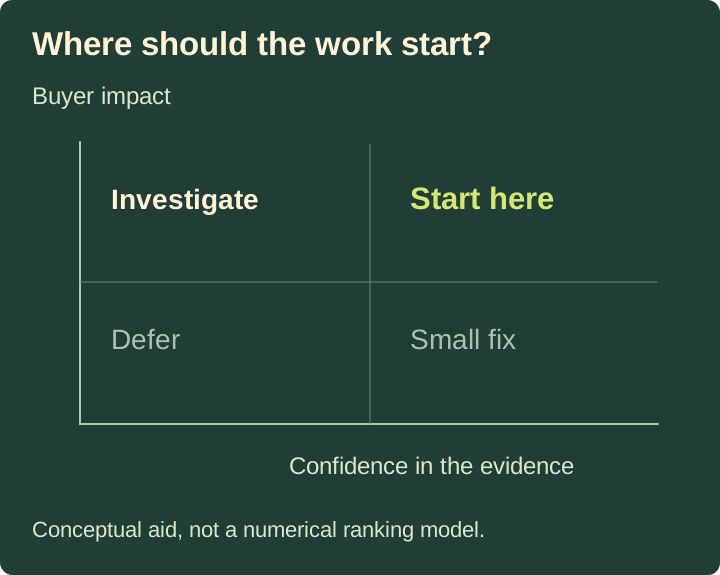
Pick one to three pages that answer a defined buyer decision. Save their current content and your initial observations. Finish the work only when the claims, links and visuals have been checked on the resulting pages.
Then watch the relevant outcomes: accurate descriptions in your saved answer sample, platform visibility where reported, identifiable visits and useful business actions. The measurement guide explains why those records stay separate.
Do we need more articles? Only if an important question lacks a suitable page. Improve the existing answer when a second article would repeat it.
Can a finished page be guaranteed to appear in AI answers? No. Completion means the page is useful, accessible and checked. Selection by a search or answer system remains outside your control.
Start with the page missing the information a buyer needs to make a decision. Use a visibility scan as one input, then bring the changes and subsequent observations to your weekly review.
Citations (5)showhide
See who AI recommends in your category
The free scan asks ChatGPT three of your buyers' questions and shows whether you're in the answer, in about a minute.
Run the free scan →